
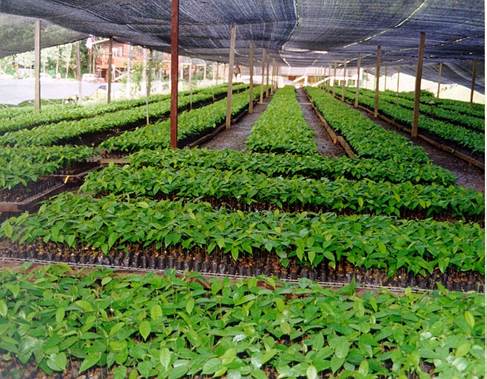
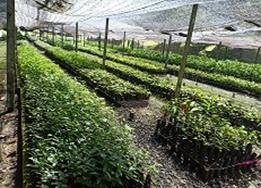
Innoprise - FACE Project Nursery. Capacity: 1 million seedlings
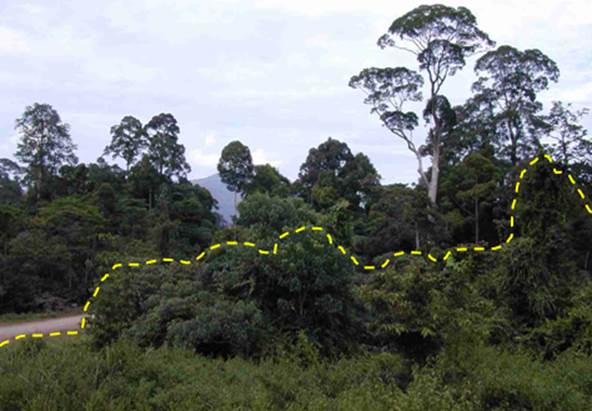
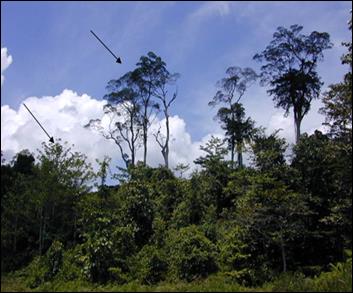
Silviculturally treated area (background) vs untreated (foreground)
INTRODUCTION
Innoprise-Face Foundation Rainforest Rehablitation Project (INFAPRO) is a collaborative project between Innoprise Corporation Sdn.Bhd and the FACE (Forest Absorbing Carbon dioxide Emissions) of the Netherlands. Started in July 1992, severely degraded forests are planted using indigenous dipterocarps and wild fruits species to absorbs carbon dioxide from the atmosphere. At the same time the project can sustain timber and non timber values under circumstances acceptable by society.
The project has successfully developed a number of operational manuals and guidelines on production of planting materials to field activities for large scale rehabilitation of degraded forest. It is also a tropical rainforest rehabilitation model in the region.
To date, 11,864.29 ha has been rehabilitated (Contract 1 – 2011.79 ha; Contract 2 – 3,012 ha; Contract 3 - 4,785 ha; Contract 4 - 1,117 ha; Contract 5 - 640 ha; Contract 6 - 69 ha; Contract 7 - 22.5 ha, Contract 8 – 167.0 and Contract 9 – 40 ha).
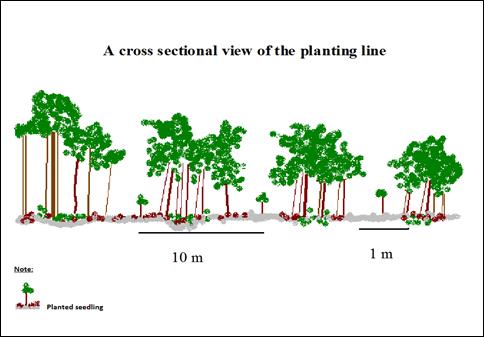
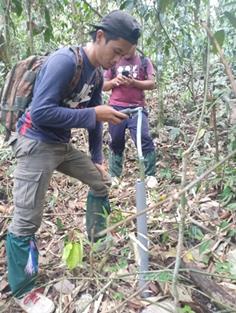
Establishing research plot in Contract 9
DEVELOPMENT AREA
INFAPRO Development Area consists of 29,501 ha of degraded logged dipterocarps forest in the Ulu Segama Forest Reserve, eastern Sabah, at 50N,1170E. Many research programmes in forest management, ecology, forest dynamics, biodiversity, hydrology, forest meteorological and wildlife studies have been successfully undertaken within the area.
Location
The operational base of the project is located at INFAPRO KM58, central of the project Development Area, which is 11 KM from the world renowned Danum Valley Field Centre, and 73 km from the nearest town, Lahad Datu.
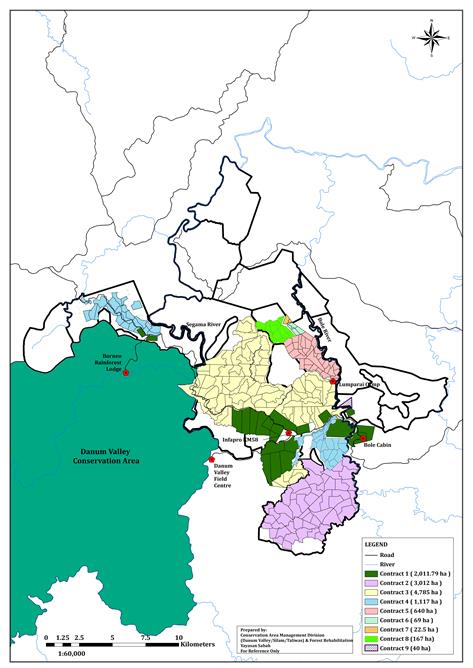
INFAPRO Development Area
PROJECT ACTIVITIES
The project concept and techniques for the implementation phase have evolved from 100% enrichment planting (Contract 1) to a combination of enrichment planting and tending of existing natural regeneration (Contracts 2 - 9) until a refined stand of high biomass forest is achieved.
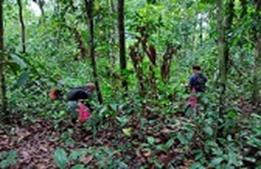
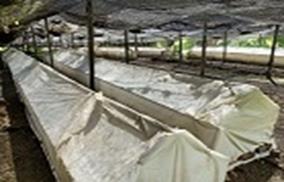
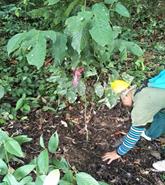
Collection of wildings to be raised as planting materials

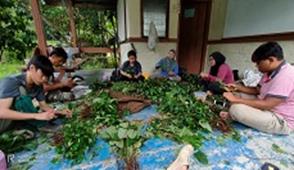


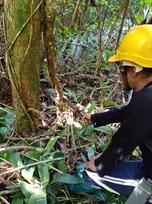
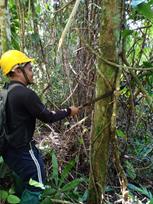
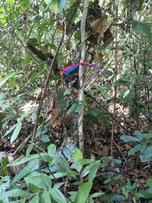
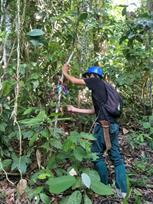
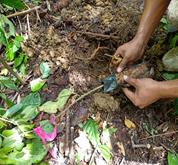
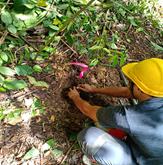
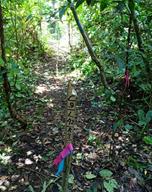
All compartments are managed and maintained intensively for the first three years after planting by climber cutting, liberation thinning, row slashing and ring weeding. Both survival rate and growth rate are monitored.
|
|
|
|
Climber cutting
|
Liberation |
|
|
Ring weeding |
|
Enrichment planting |
Row slashing |
SCIENTIFIC RESEARCH AND TRAINING PROGRAMME
There are two types of research undertaken, that is short-term and long-term research. Short-term research priorities are designed to pursue particular investigation for large-scale rehabilitation and are often informed of any problems arising during project implementation. Thus, it is supporting the nursery and field operation activities to improve rehabilitation techniques and silvicultural treatments to the forest to obtain a higher survival rate and to maximize the growth of treated plants.
Long term research involves more specialized investigations such as the carbon offset verification study, production of planting material by vegetative propagation techniques, manipulation of the canopy for light, planting nutrition, association of dipterocarps with mycorrhizae, soil dynamics, natural recovery of logged-over forests, the ecophysiology of diptercocarps, genetic improvement, pests and diseases.
|
Compartment 3B 89-33/38/40 (3yr stand, Dryobalanops lanceolata )
|
81B - 7yr stand
|
|
81A - 10yr stand (Dryobalanops lanceolata)
|
88B - 18yr stand
|
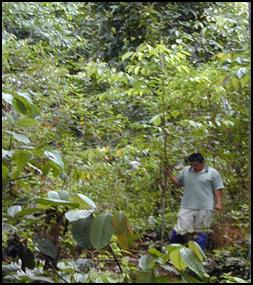
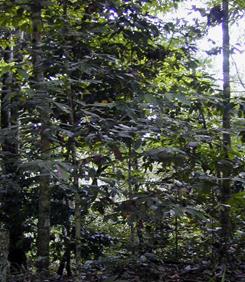
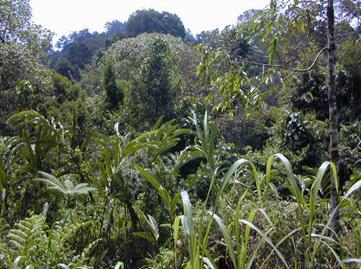
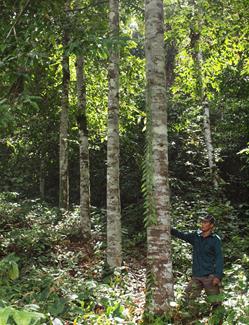
Changes of the treated stand over 18 years
|
81A - 6 yr
|
81A - 18 yr
|
|
81A - 10 yr
|
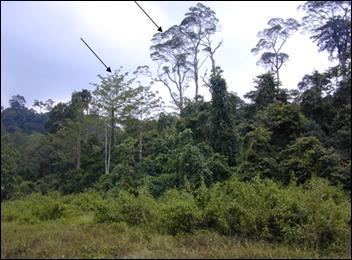
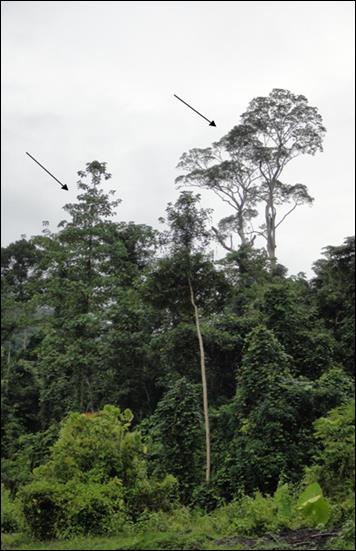
SOCIAL CONTRIBUTIONS
1) More than 50 locals benefits currently from the project.
2) More than 150 locals were coached & trained & benefit from the project that have left to seek
other opportunities elsewhere.
3) Facilities at camp provided for staff include staff quarters, treated water supply, 24-hour electricity supply, satellite phone and TV, internet access, outdoor games, etc. that are fully borne by the project.
4) Postgraduate studies opportunities for locals.
5) Technology transfer “FIELDMAP” (a laser technology with computer aided field mapping programme) for the project
6) Facilitate Environmental Education (EE) and public awareness for students, head villages and JKKK.
7) Higher learning institutions and local colleges.
8) Facilitate scientist field works from DVCA (local & overseas).
9) Visit by Royalties and VVIP including former Yang di Pertuan Agung, HE Prime Ministers, State & Federal Ministers, HRH King of Sweden & family, HRH Prince William & HRH Kate Middleton, HE Ambassadors and Foreign Ministers, Celebrity Dame Judi Dench and many others.
Notable Achievements
1) The first forestry project in Malaysia to initiate SGS’s Carbon Offset Verification (COV) programme in 2002.
2) Undergoing Forest Stewardship Council (FSC), Verified Carbon Standard (VCS) & Community and Biodiversity Alliance (CCBA), pre-assessment by SGS The Netherlands, UK & Malaysia in 2008 & in 2011.
3) First of its kind in the world - Improved Forest Management (IFM) with avoidance re-logging methodology approved by VCS Board (Nov 2010).
4) Submitted INFAPRO Project Design Document (PDD) for Carbon Credit Verification & Validation (May 2011).
5) Carbon credit verified and validated under VCS by SCS Auditors from USA & Malaysia. Closing of NCRs by SCS end of August 2011.
6) FSC certified by SCS (13 June 2011) for the Ulu Segama Malua Project (est. 240,000 ha) of which INFAPRO is a part of.
7) First Forestry Project (AFOLU) in Asia to be validated & certified under VCS (Sept 2011).
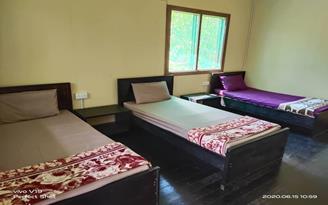
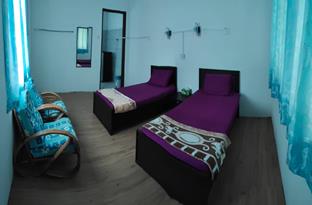
ACCOMMODATION
|
Accommodation Name |
Total Rooms |
No of beds |
Types of room |
|
Gagil |
4 |
2 |
Aircond, attached bathroom with heater |
|
Mengaris |
3 |
2 |
Fan, attached bathroom with heater |
|
Agathis |
3 |
3 |
Fan, attached bathroom with heater |
|
Resak |
6 |
2 |
Fan, attached bathroom without heater |
For more information inquiry:-
INFAPRO Project
Conservation Area Management Division
(Danum Valley/Silam/Taliwas) & Forest Rehabilitation (CAFRD)
YAYASAN SABAH GROUP
Level 9, Tun Mustapha Tower
Likas Bay, P.O. Box 11201
88813 Kota Kinabalu, Sabah, Malaysia
Telephone No: +6 088 326 320
Fax: +6 008 326 315
Email: yscafrd@gmail.com